NVIDIA and NVQLink
Speaker: Yun-Yuan Wang, Senior Solution Architect
2026.03.08NVIDIA is currently the world's largest provider of accelerated computing and high-speed interconnect solutions. As Moore's Law reaches its physical limits and single-chip computing density growth slows down, GPU parallel computing has become the backbone of modern computational power. Furthermore, with the evolution of large AI models, increasingly massive model parameters and training tasks must be distributed across hundreds of GPUs. Consequently, communication between GPUs and across racks has become a bottleneck. To address this, NVIDIA has developed high-speed interconnect technologies to eliminate communication latency between GPUs. High-speed interconnect is also critical in quantum computing. Qubits require nanosecond-level (GHz) operational precision and real-time calibration control. As the number of qubits increases, the parameters required to operate the entire chip grow at least quadratically. This makes real-time signal processing and exchange between control instruments and the QPU a vital issue. NVQLink, evolved from NVLink technology, represents the pivotal role NVIDIA will play in the quantum computing landscape.
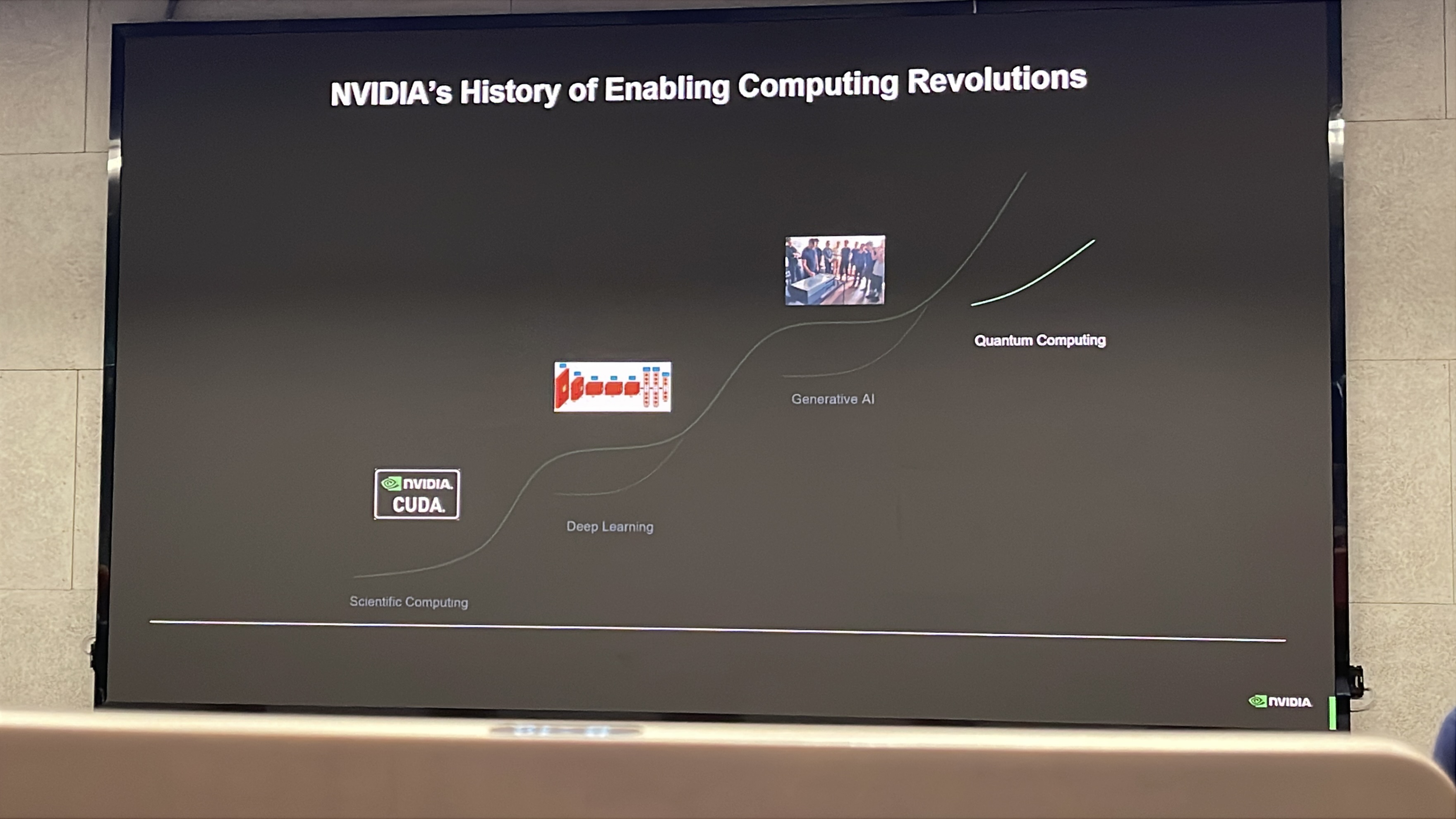
▲ NVIDIA's vision is to accelerate computing, transitioning from the CUDA scientific computing ecosystem into deep learning, generative AI, and future quantum computing.
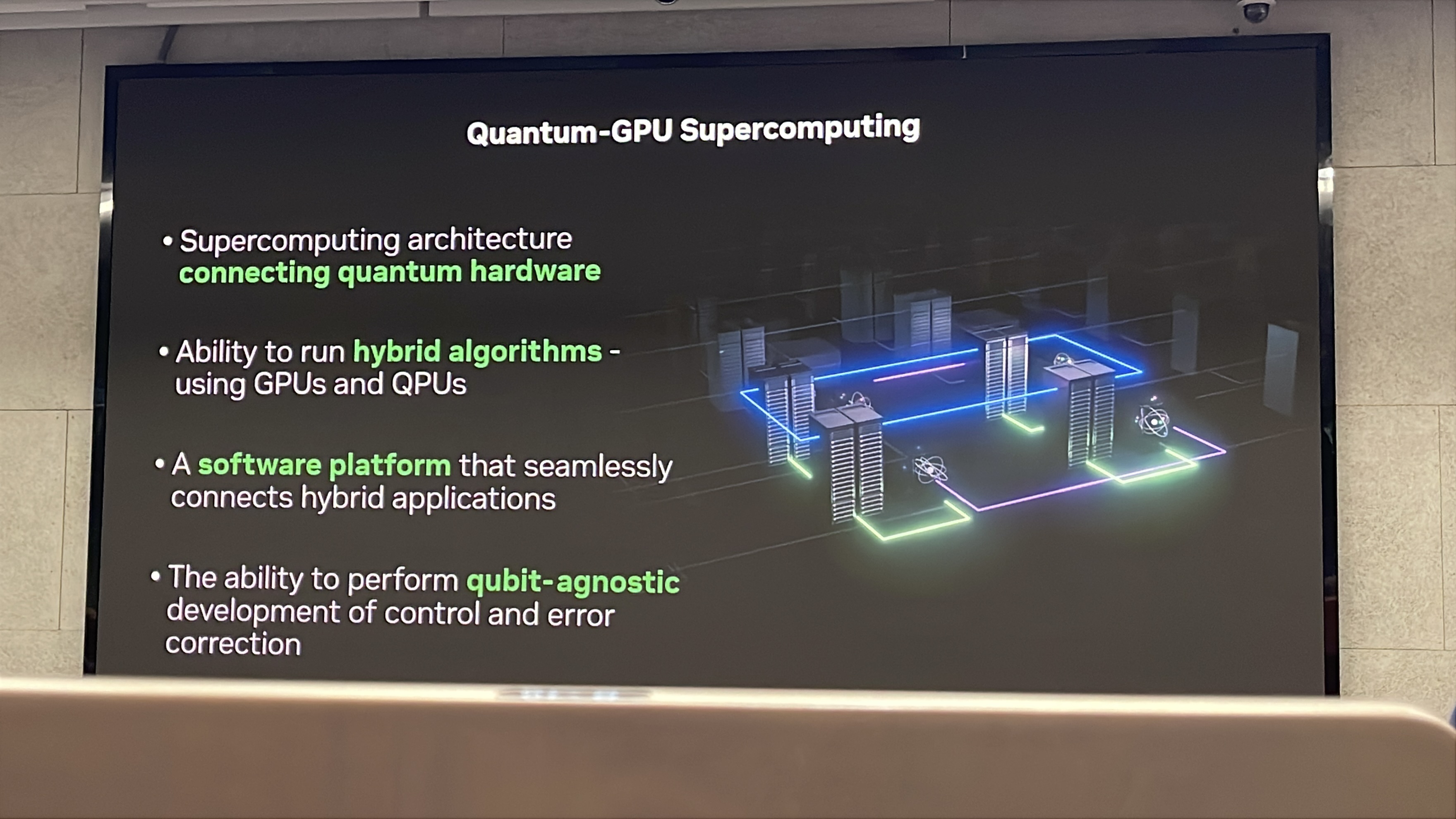
▲ NVIDIA's roadmap emphasizes a hybrid architecture of Supercomputers (HPC) + Quantum Computers (QC), providing an integrated software framework.
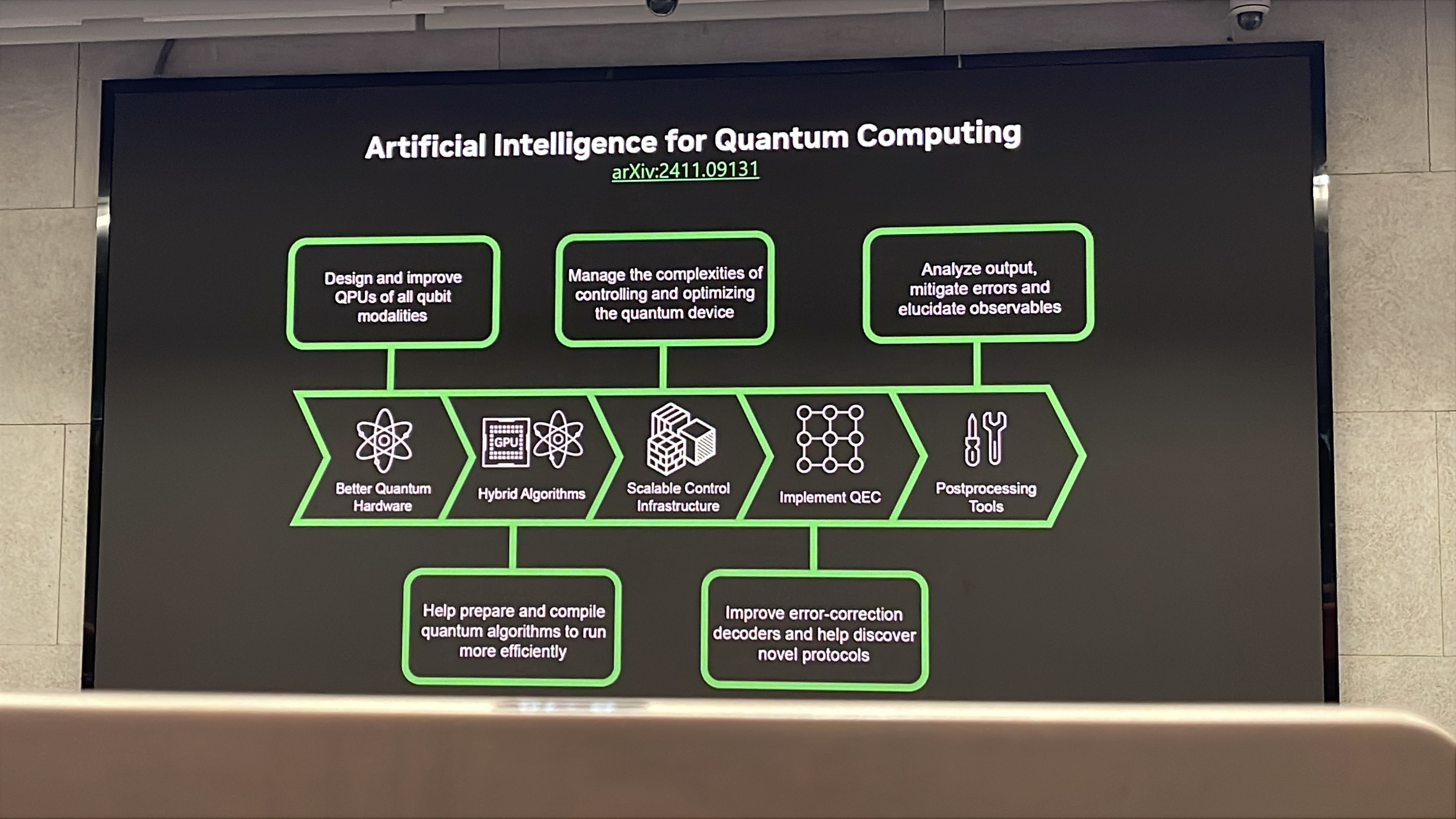
▲ AI-assisted quantum computing is a core development direction for NVIDIA, helping to design and optimize quantum chips, hybrid computing, and quantum error correction (QEC), leading toward practical applications.
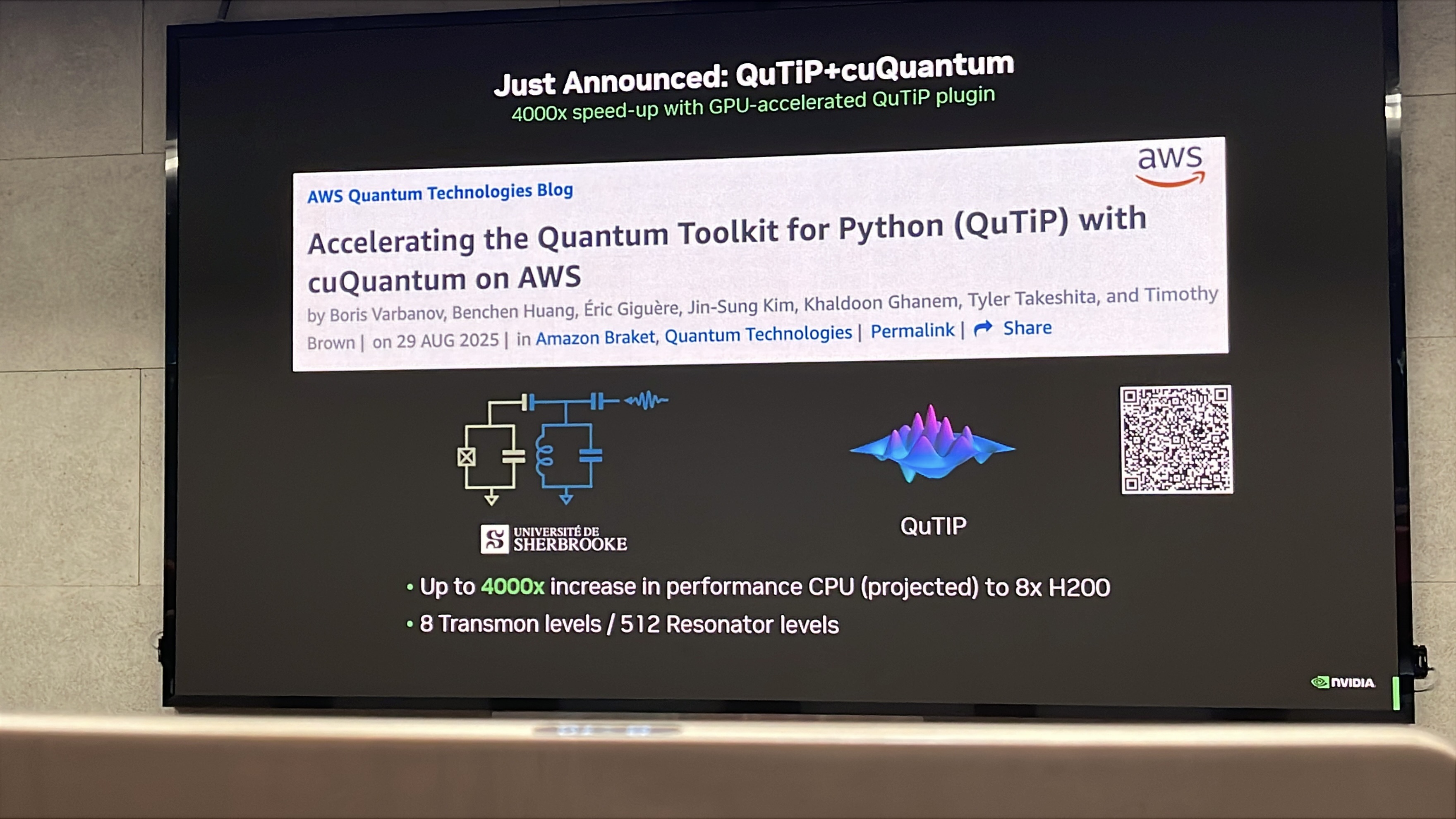
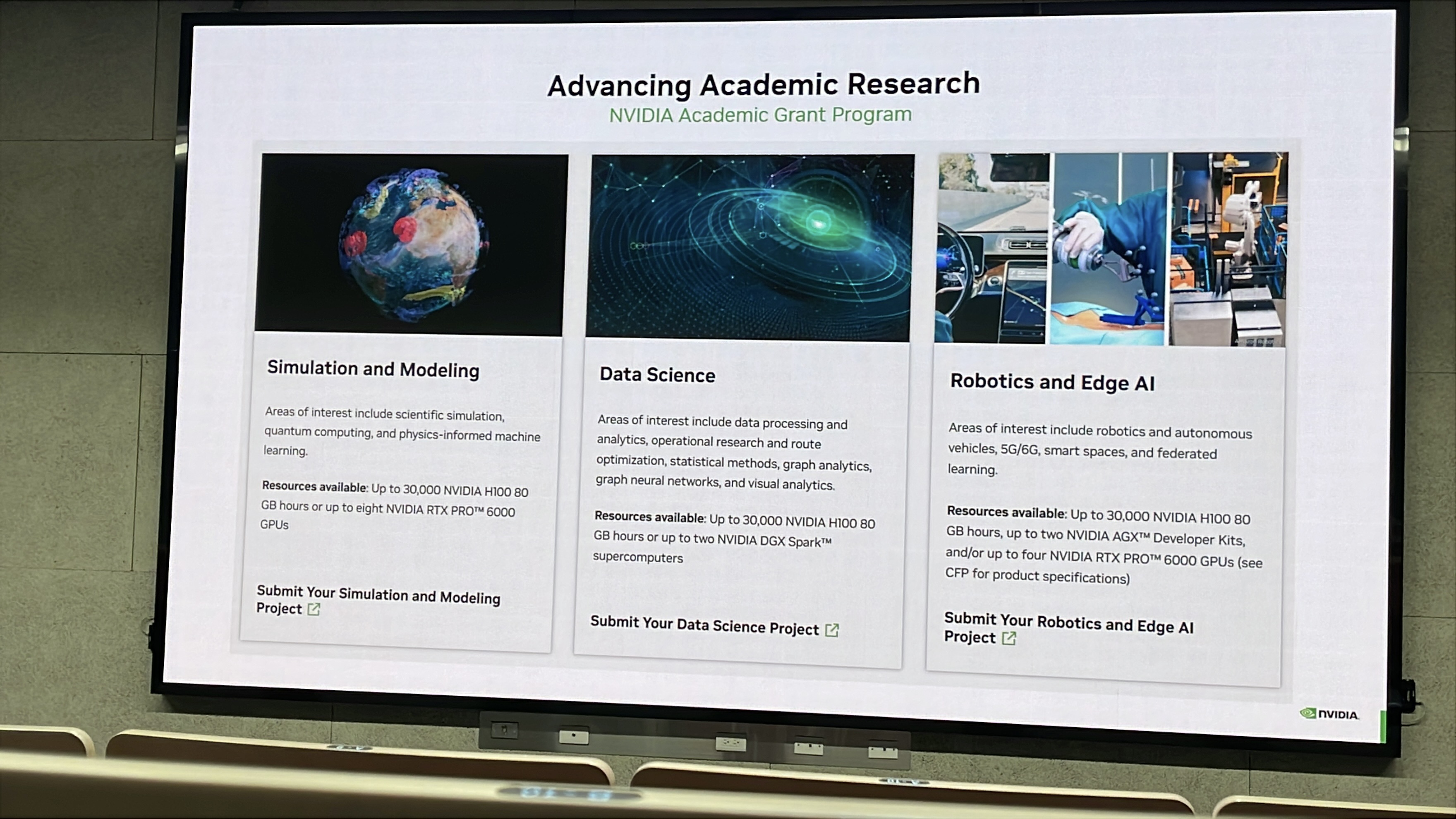
▲ Accelerating QuTip through the NVIDIA software ecosystem's cuQuantum suite. NVIDIA is simultaneously focusing on various scientific problems and cross-disciplinary applications.
NVQLink
In early 2026, Jensen Huang stated that NVIDIA is now the world's largest networking company ref. During the Vera Rubin introduction at CES 26, interconnect technology was updated alongside chip iterations, entering the CPO (Co-Packaged Optics) era. Following this logic, NVQLink is introduced as a high-speed interconnect technology specifically optimized for quantum applications.
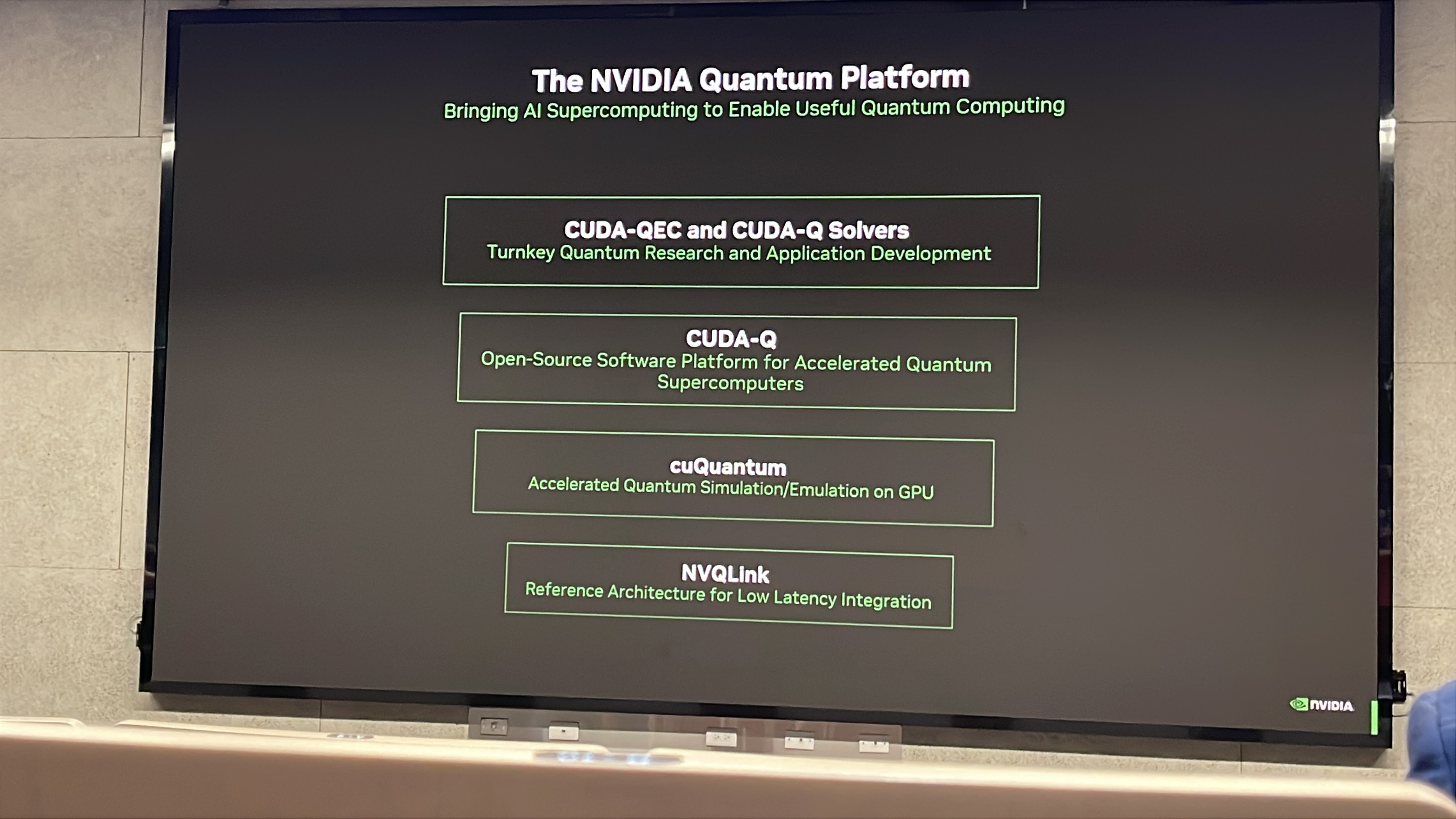
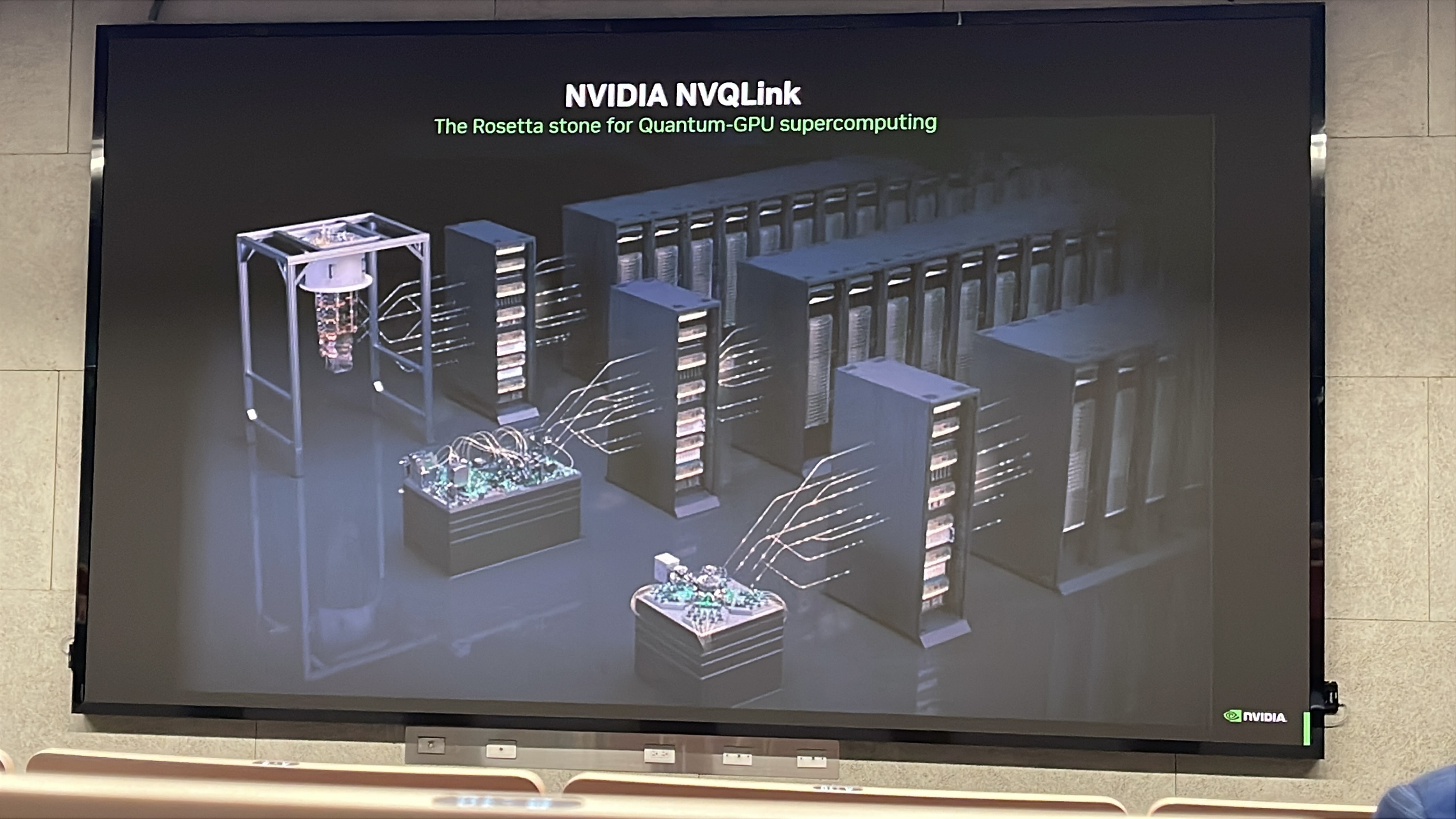
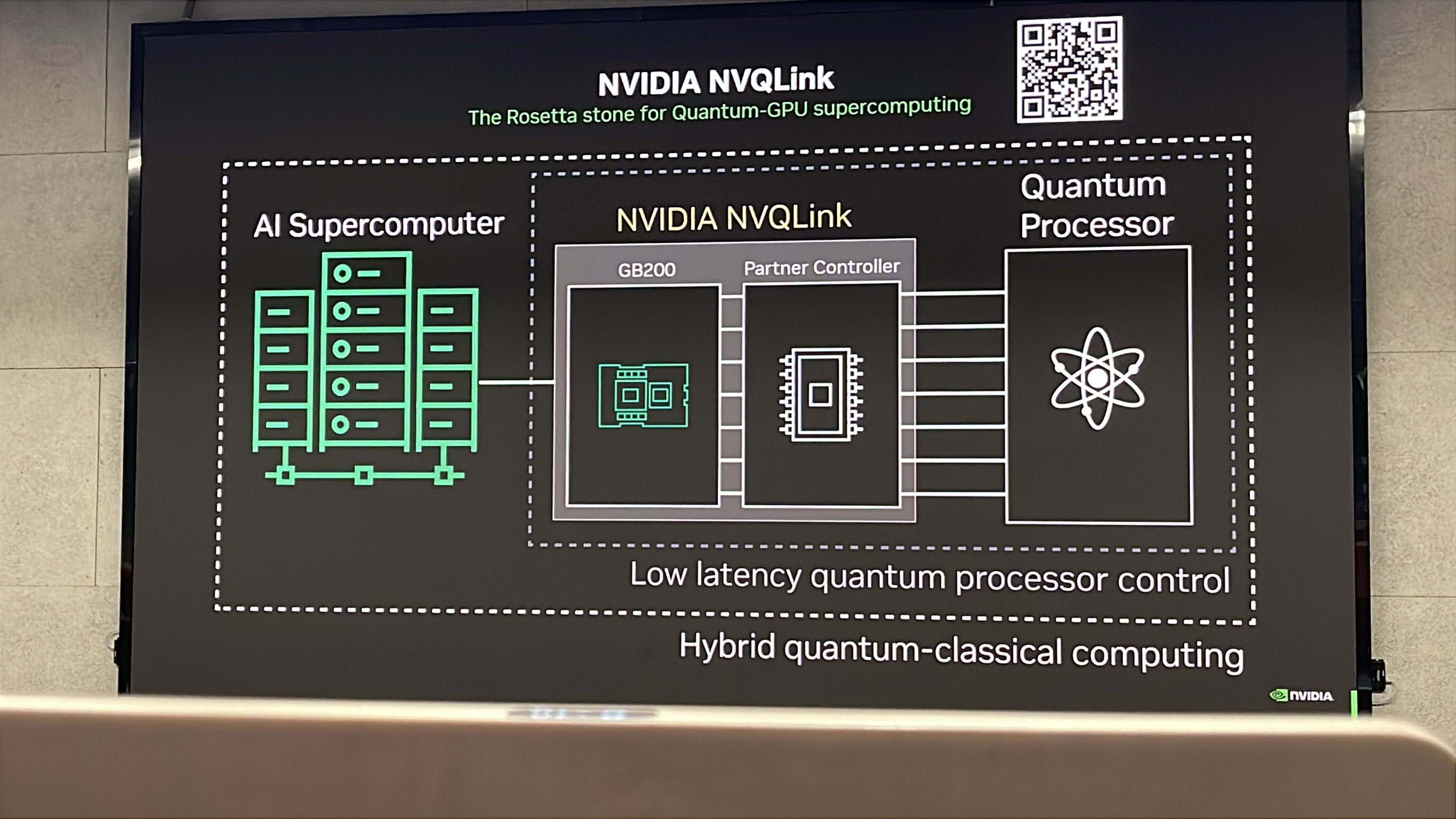
▲ The hardware-software integration ecosystem of NVQLink. The software side includes Cuda-Q and cuQuantum acceleration instructions. On the hardware side, NVQLink leverages optimized DGX systems and integration with quantum control vendors to enable rapid interconnect exchange between supercomputers and Quantum Processing Units (QPUs).
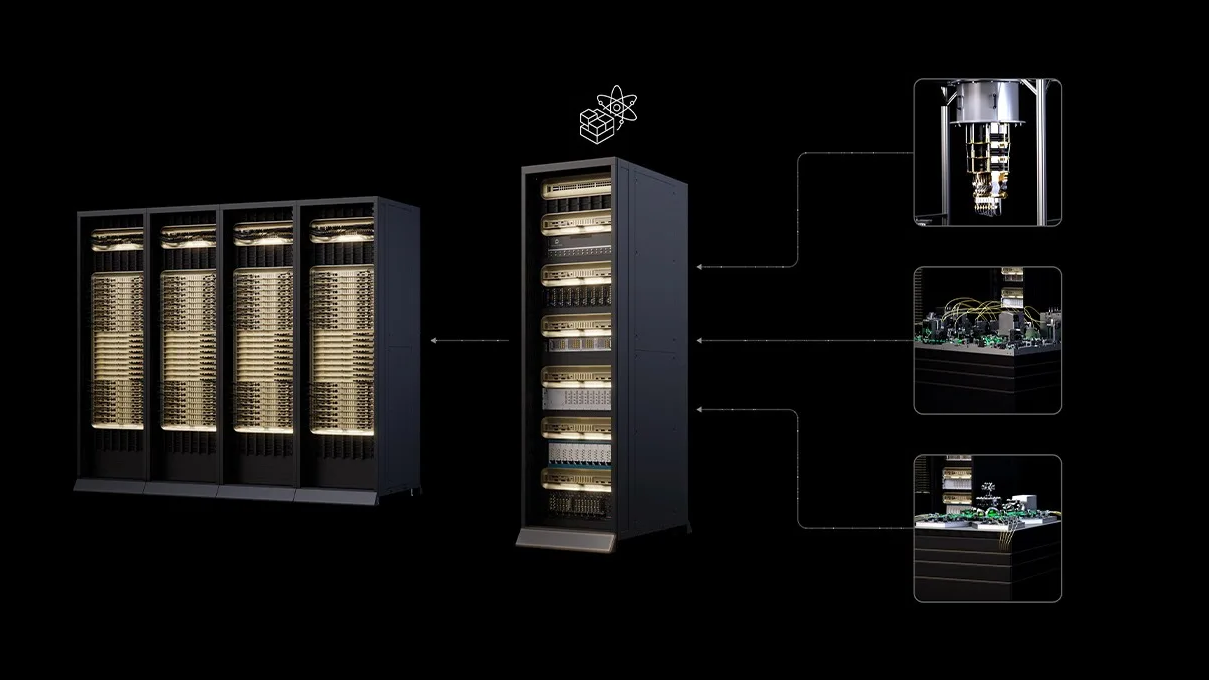
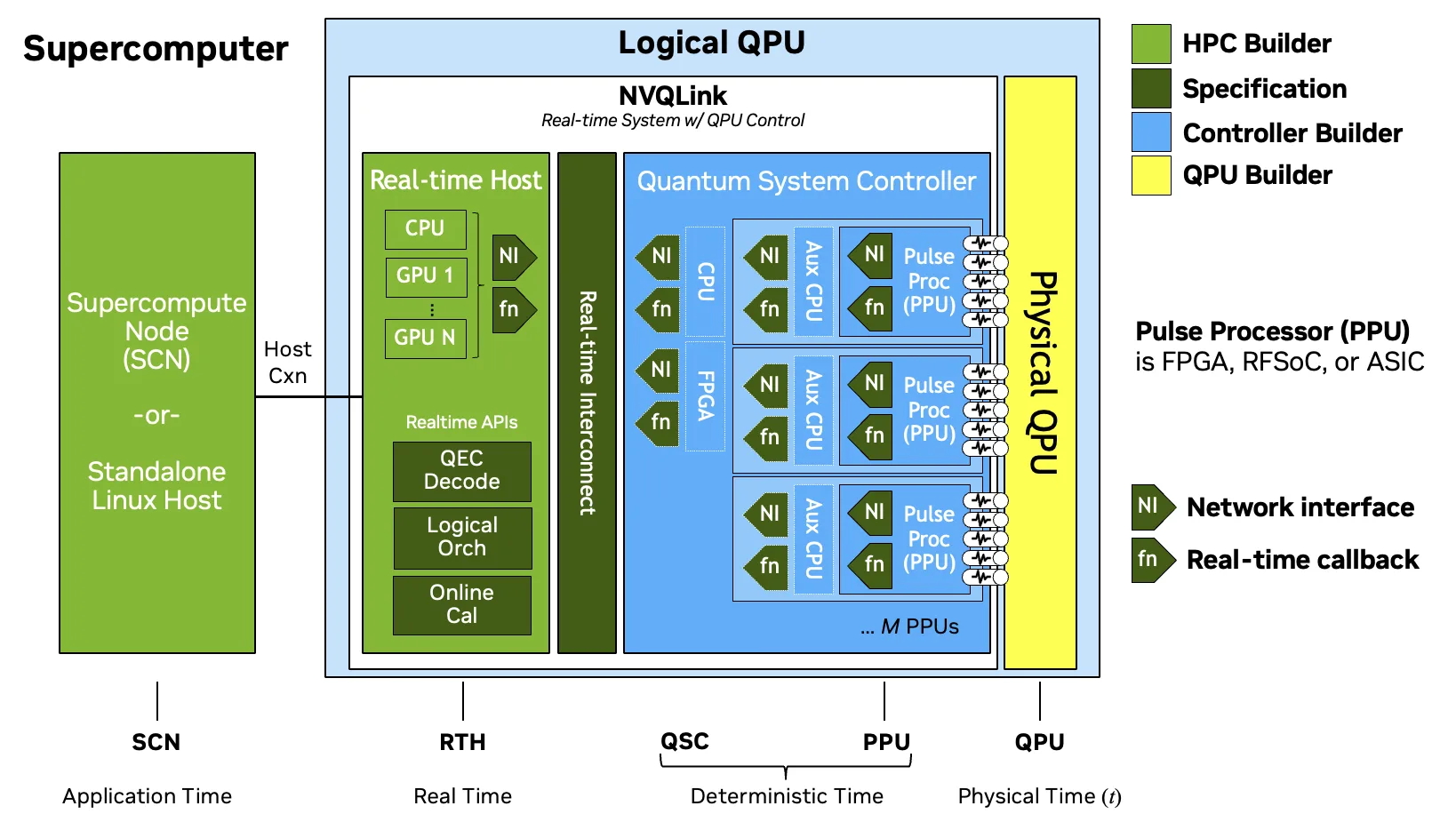
▲ In NVIDIA's official introduction of NVQLink, it is clearly shown that NVQLink acts as the intermediary between the supercomputer and the QPU. NVQLink is more than a simple information switch; it integrates hardware from quantum control vendors to operate the QPU.
Specifically, NVQLink is a high-speed signal translator that converts HPC requests into quantum control signals for the chip to process, then translates the quantum results back to the HPC. Additionally, because quantum chips require complex real-time Quantum Error Correction (QEC), NVQLink’s integrated control instruments perform error correction and calibration simultaneously.
The NVQLink solution can be interpreted as modularizing the interface between classical high-speed computing and quantum computing. Classical HPC systems do not need to bear the computational load of quantum control or calibration; meanwhile, quantum chip manufacturers only need to adapt to the NVQLink interconnect.
This provides a modular solution for upcoming hybrid computing, allowing the integration of NVQLink+QPU into existing HPC frameworks without redesigning the entire classical architecture.
Ref: https://developer.nvidia.com/blog/nvidia-nvqlink-architecture-integrates-accelerated-computing-with-quantum-processors/
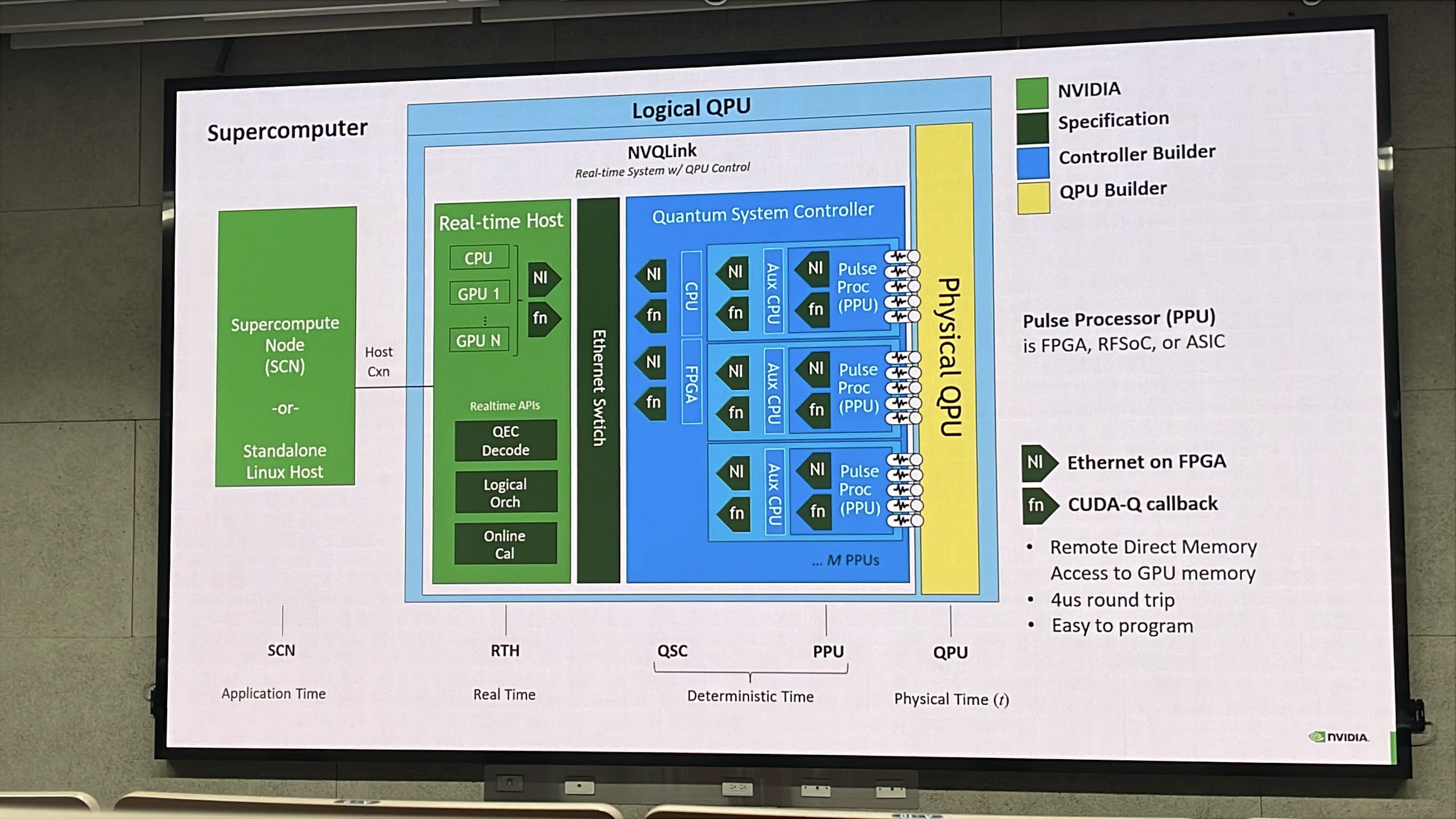
▲ The same diagram from the lecture highlights key features of NVQLink: direct GPU connection, microsecond feedback, and a programming ecosystem that benefits from the established CUDA environment.
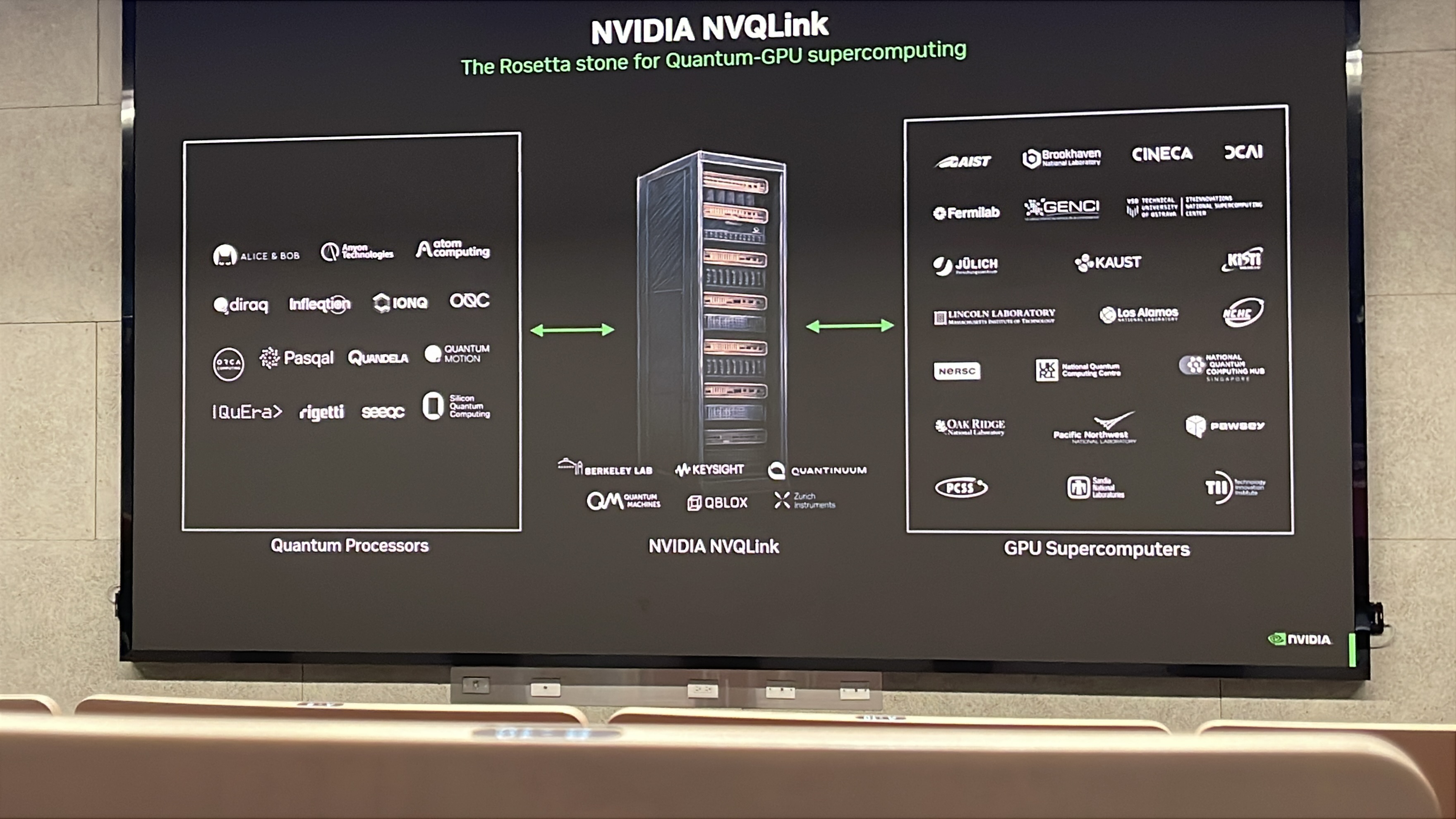
▲ Current NVQLink partner companies.
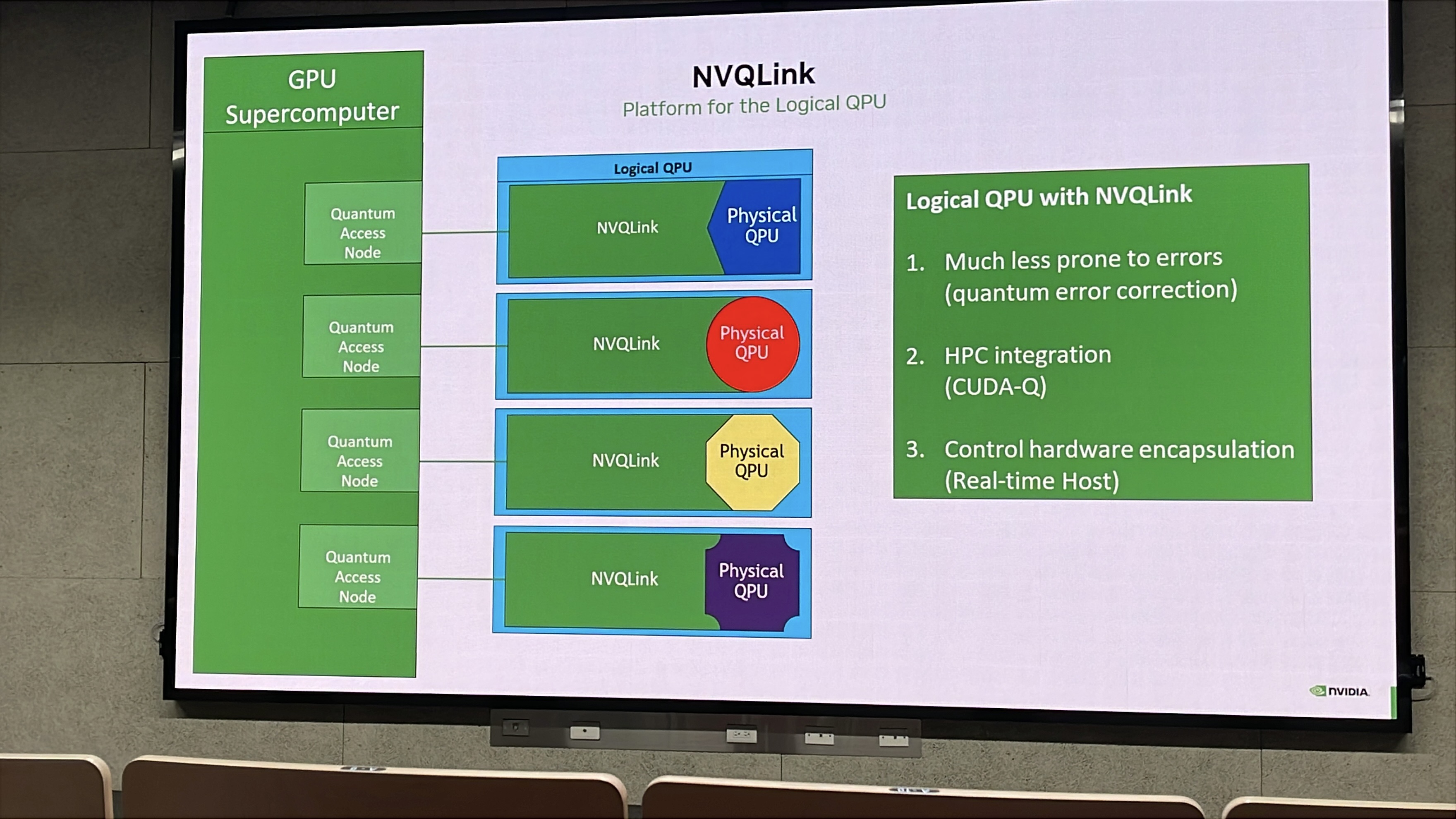
▲ Different quantum chip frameworks (e.g., superconducting, semiconductor spin qubits, photonic, neutral atoms) require completely different control structures. NVQLink isolates these heterogeneous architectures from the HPC side, providing a universal interface so existing HPC frameworks do not need individual adaptation for every QPU.
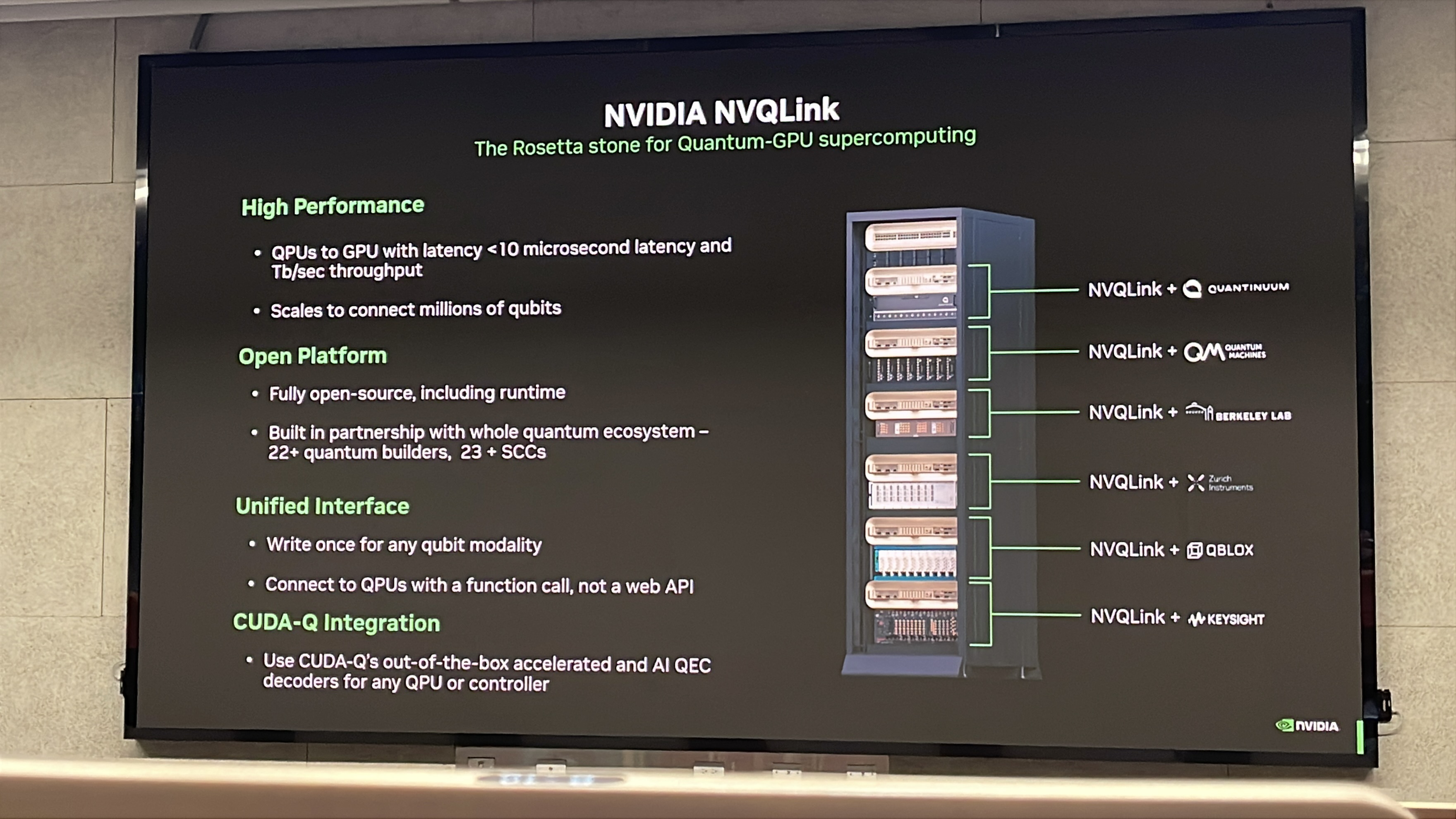
▲ Quantum control instrument vendors on the market can all be integrated with NVQLink.
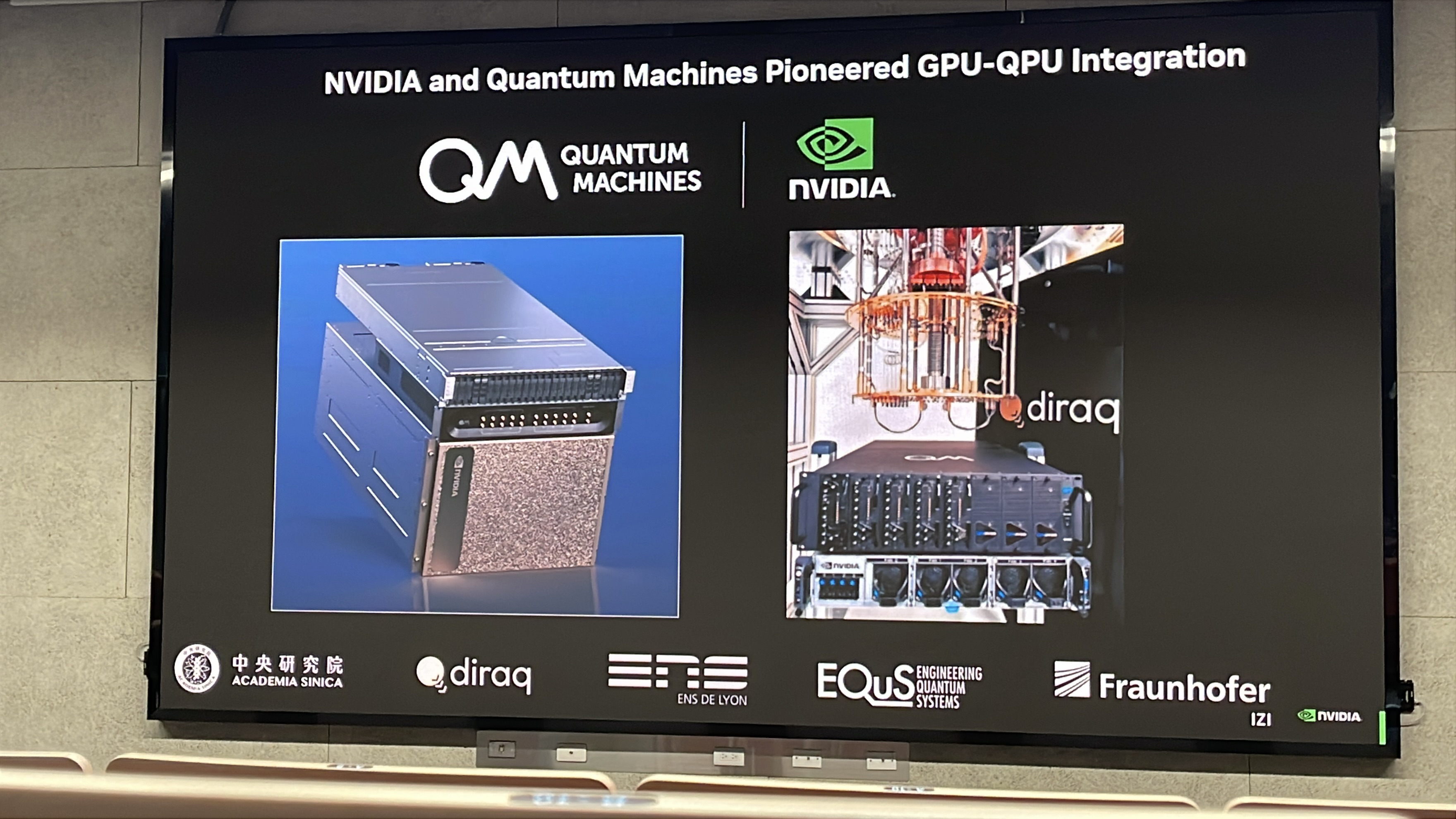
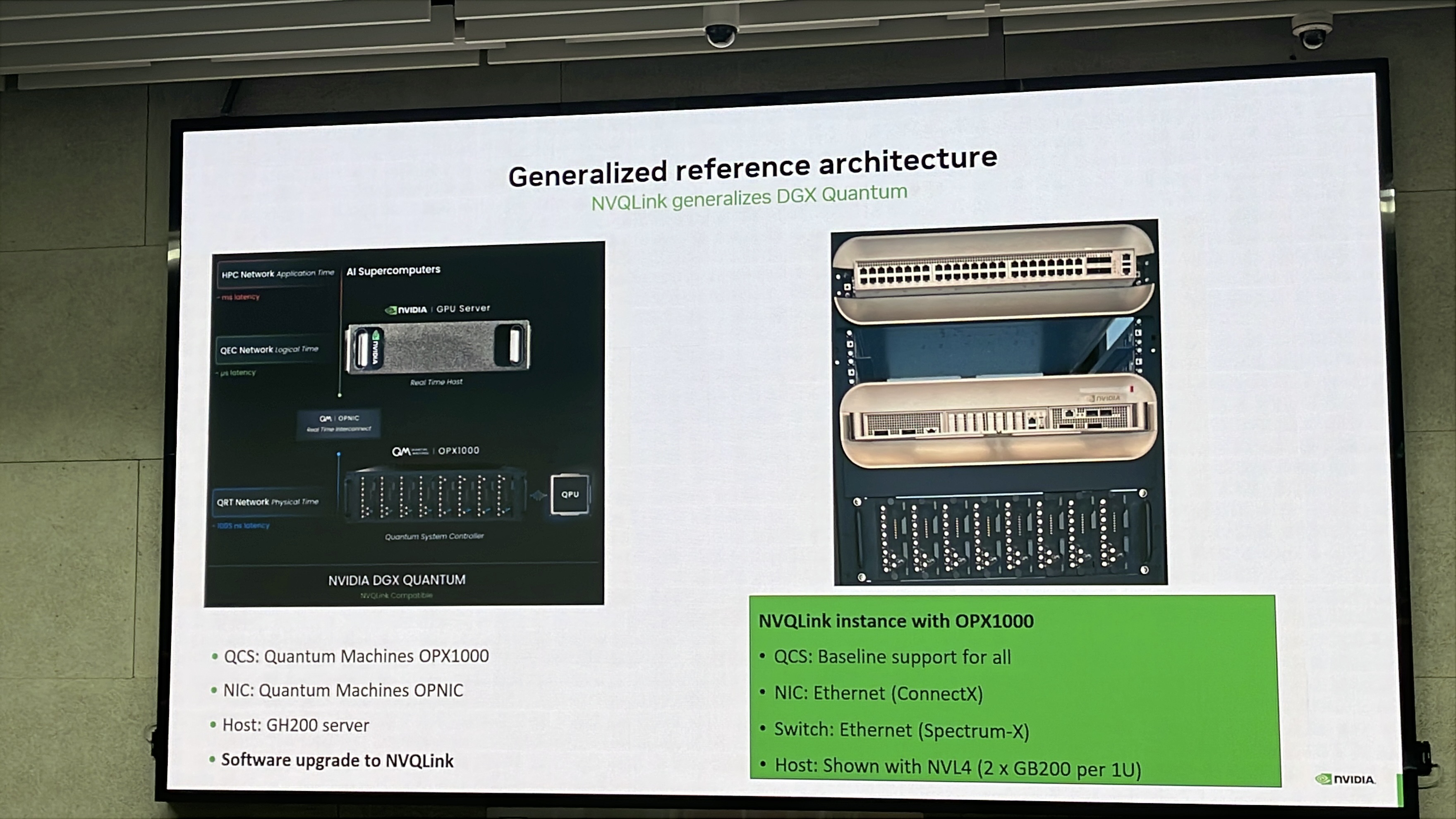
▲ Currently, the first system integrated with DGX is the Quantum Machines DGX1000.
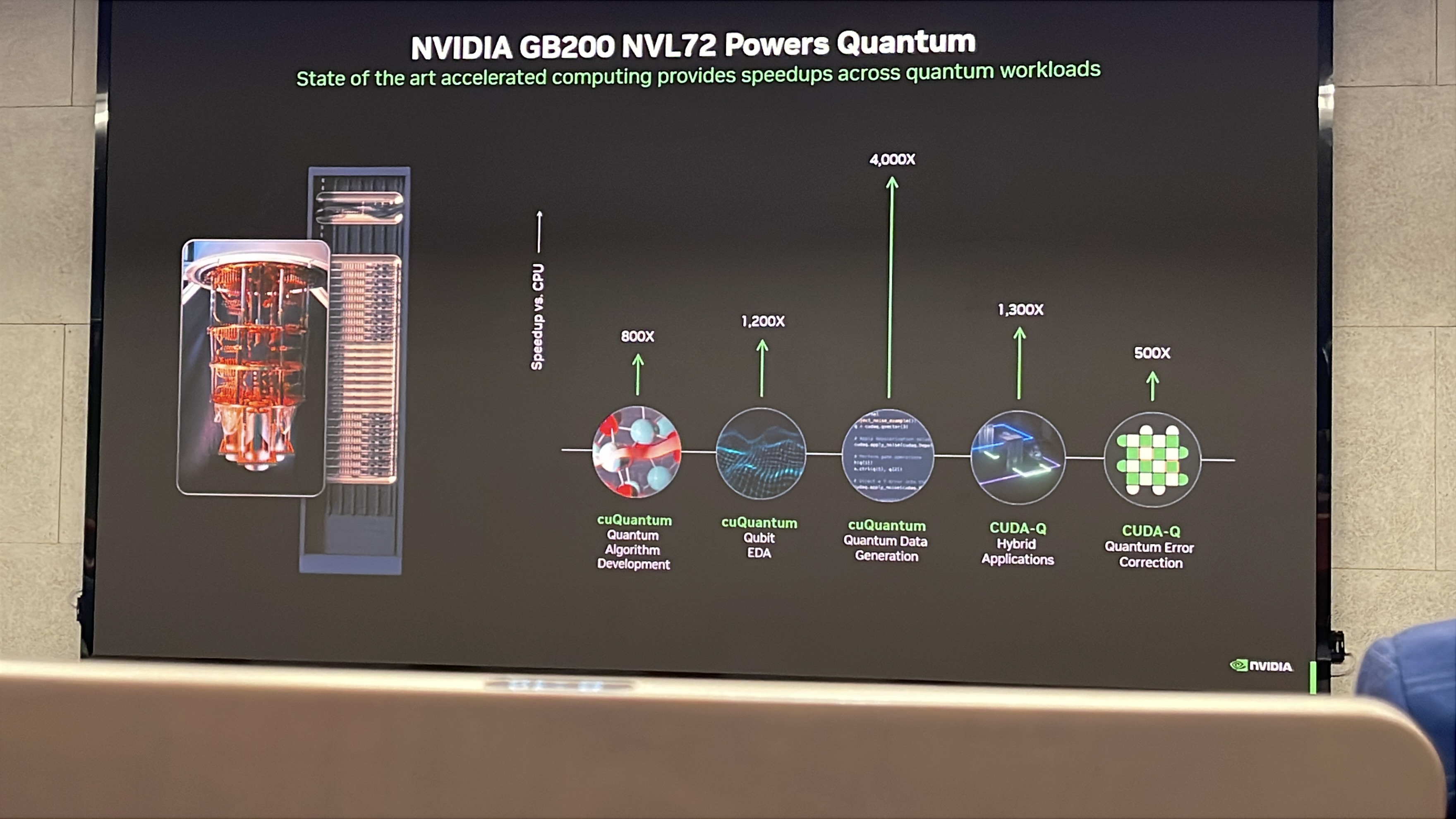
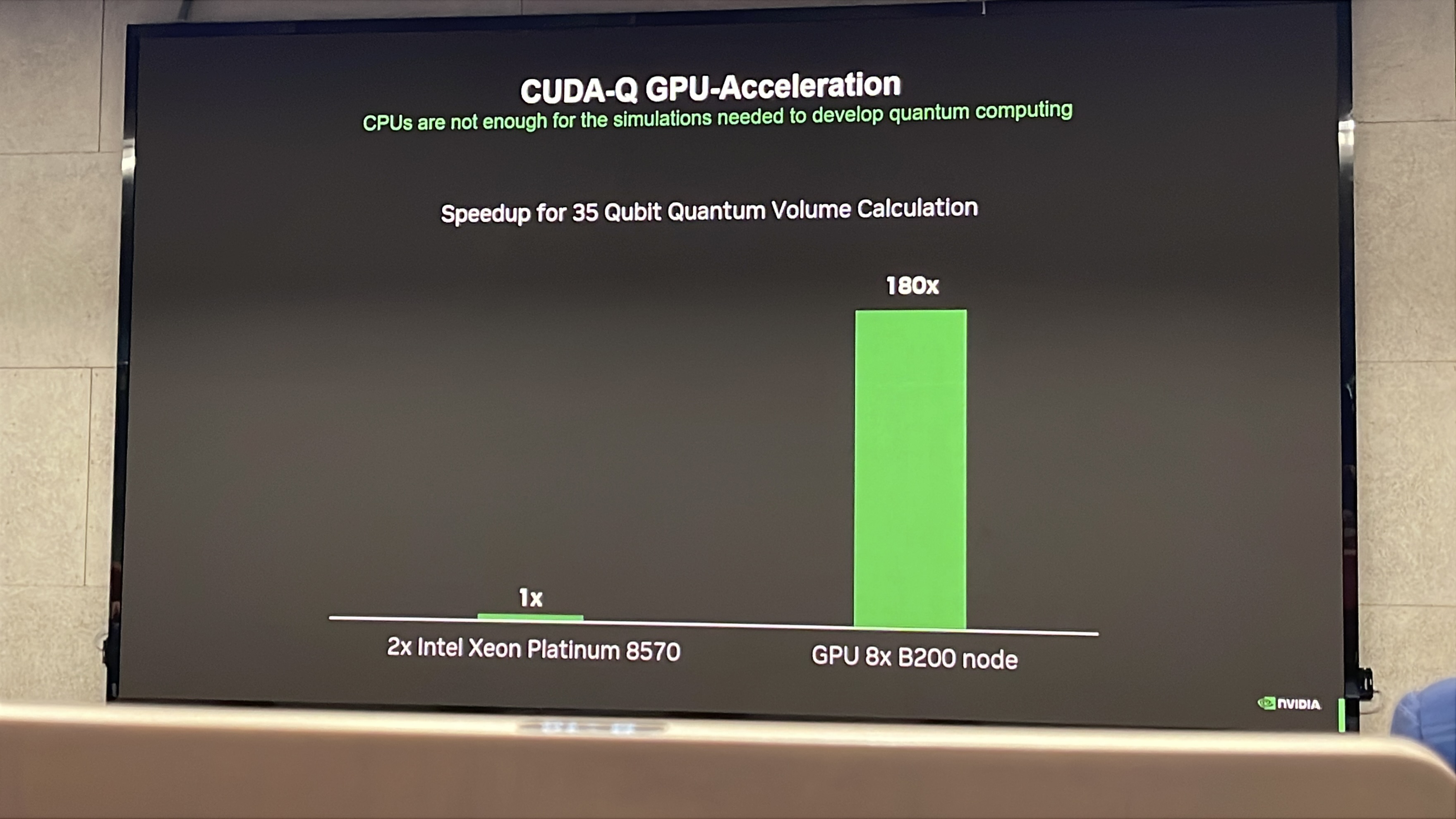
▲ NVIDIA expects that integration with large-scale NVL72 systems will significantly accelerate quantum computing development.
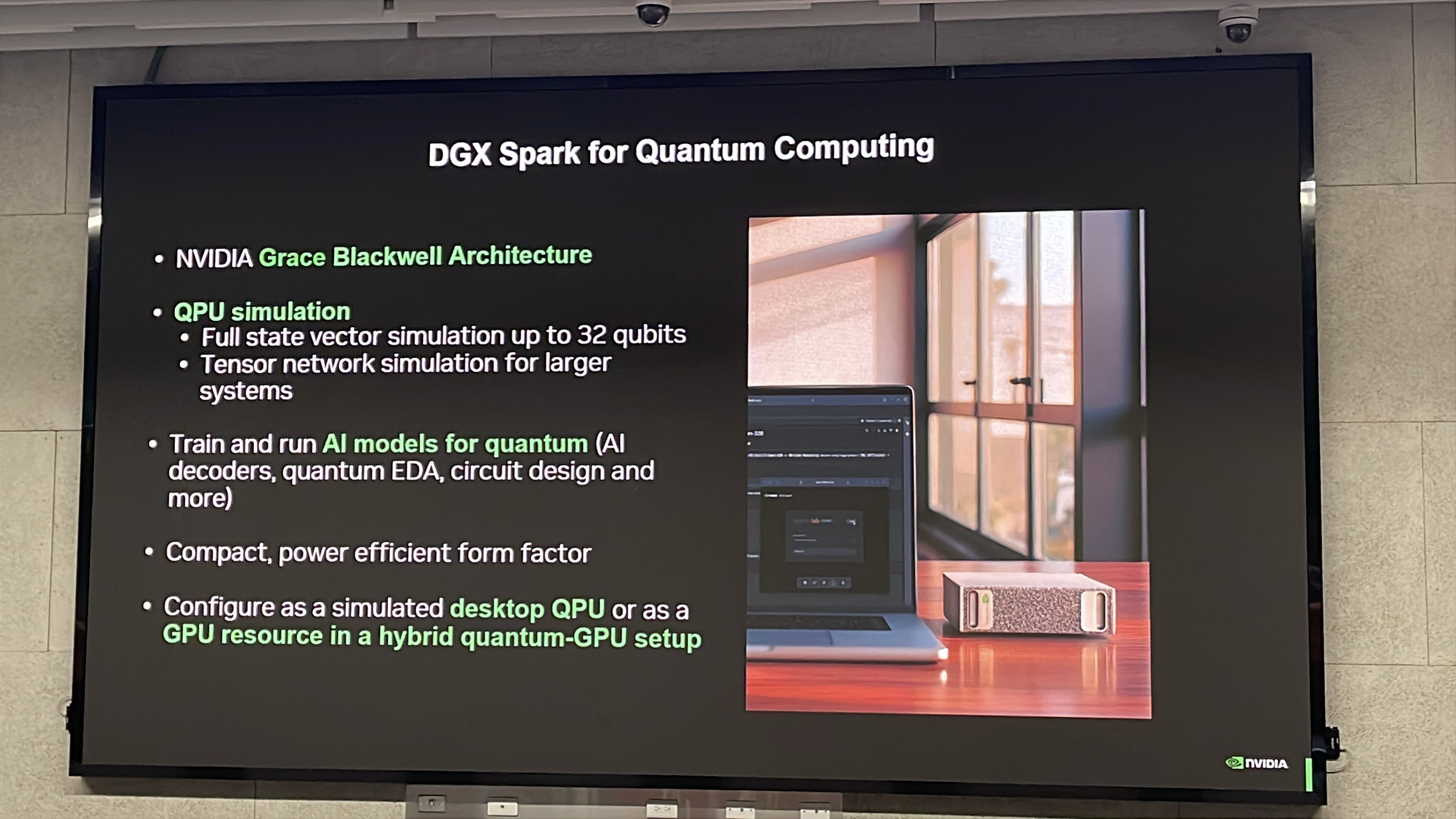
▲ The desktop DGX Spark provides a personalized platform for quantum development tools.
Originally written in Chinese by the author, these articles are translated into English to invite cross-language resonance.
 Peir-Ru Wang