AMD
FAE Adaptive & Embedded Computing Group
2026.02.26
As a major chip manufacturer in the current market, AMD's products span CPUs, GPUs, and FPGAs. Through the acquisition of Xilinx, AMD has become a vital supplier of FPGA chips, and the open-source quantum control project QICK, led by FermiLab, utilizes Xilinx chips.
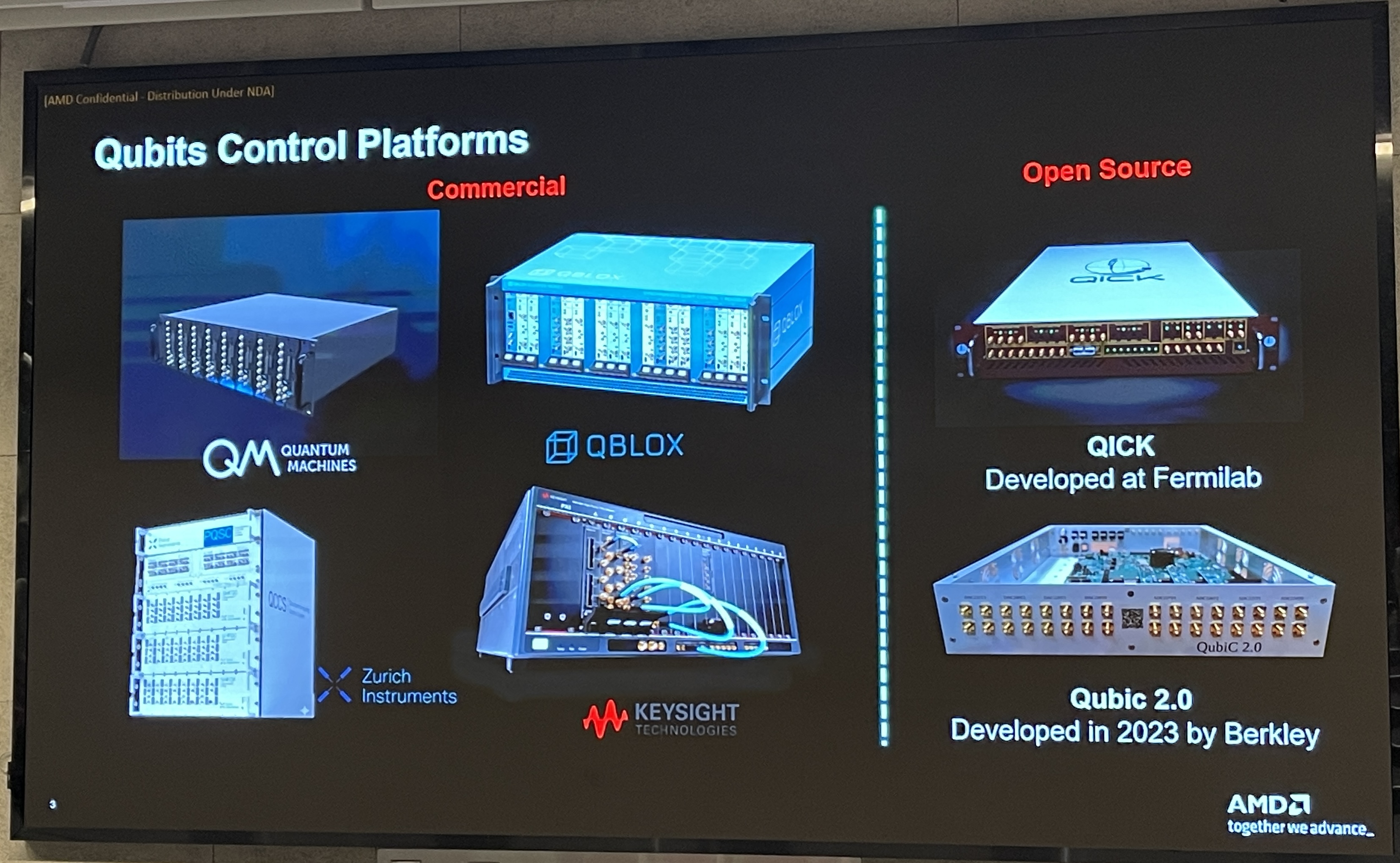
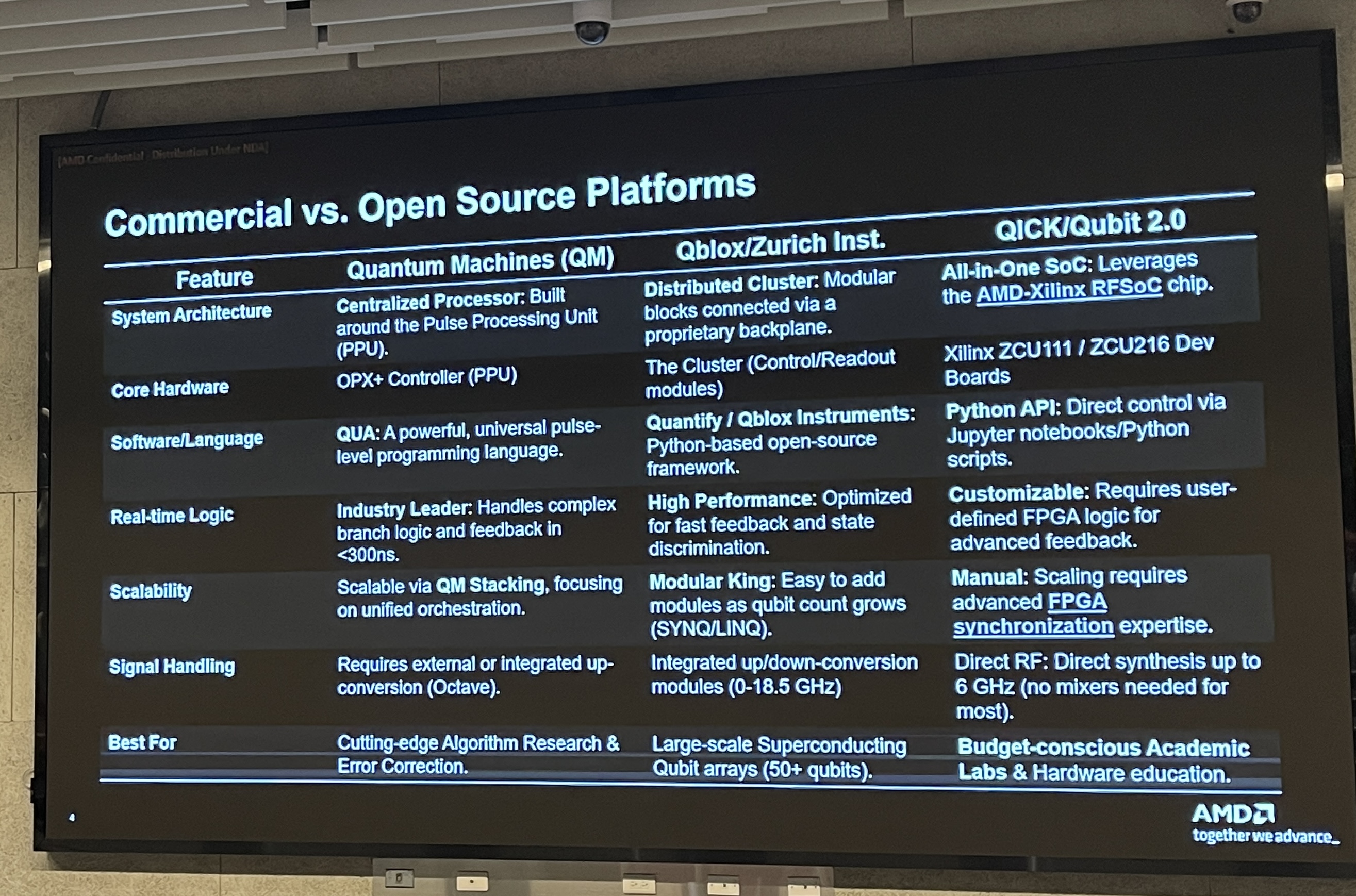
▲ Among the mainstream quantum control vendor solutions currently on the market, the QM OPX1000 + Nvidia DGXQ is the most competitive solution available (2025~2026), possessing significant advantages in scalability and hardware-software integration. However, the trade-off is its extreme cost; generally, only large-scale national research institutions or tech giants can afford to purchase the complete solution. For academic research labs or mid-sized commercial research teams looking to build their research capacity, adopting an open-source system is a viable alternative, and the open-source QICK project provides comprehensive platform support and specifications.
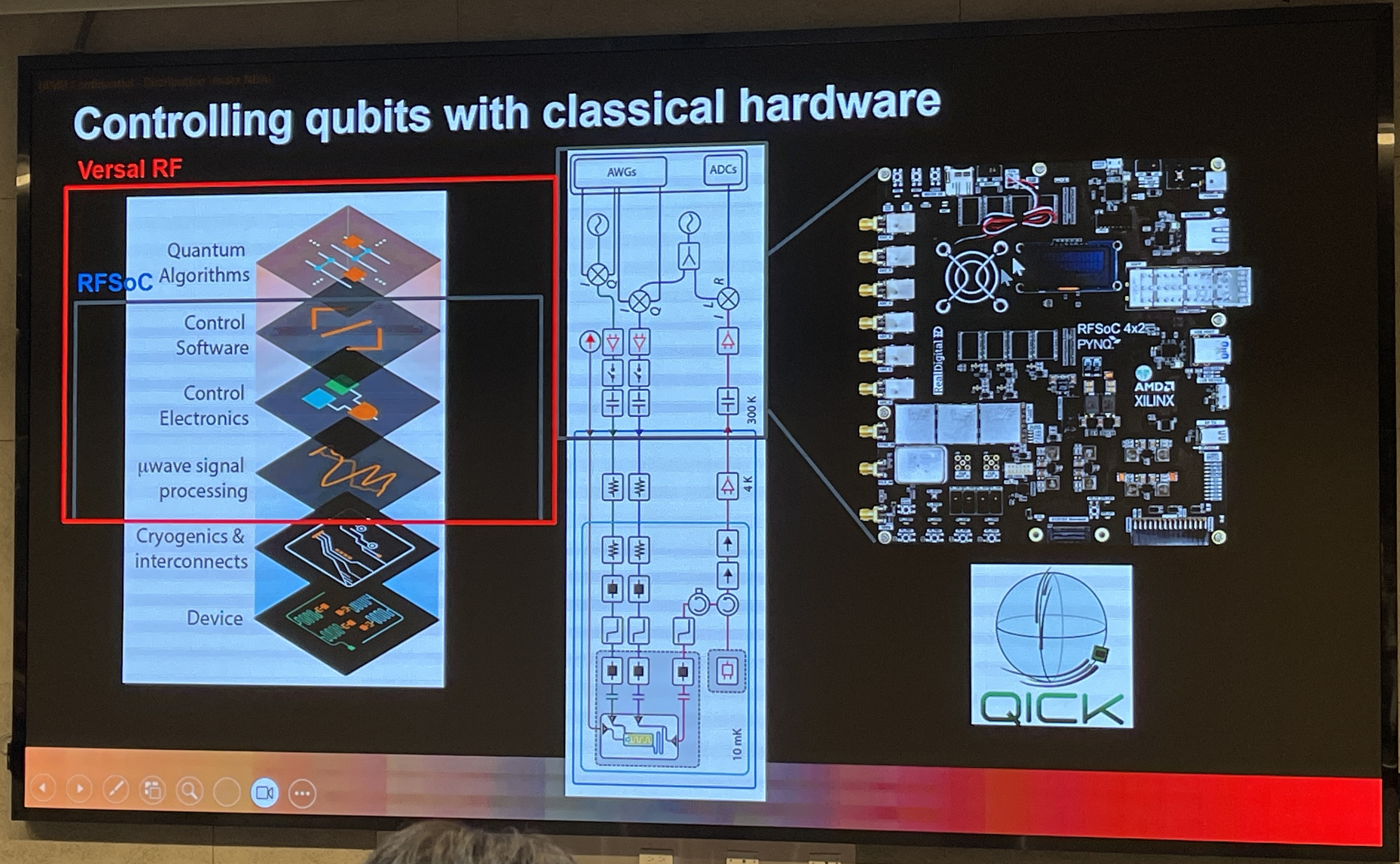
▲ Current quantum computer development relies heavily on FPGAs. The control of current qubits is similar to analog circuits, specifically high-frequency analog circuits like microwave/RF. Finely controlling a qubit requires precise adjustment of the waveform, amplitude, and timing of microwave pulses (at the nanosecond level). Simultaneously, multiple qubits mean multiple control loops require nanosecond-level synchronization. Current "classical" computer control chips are digital circuits, so converting program sequences from digital signals into multi-channel, precisely synchronized time-series microwave signals relies on high-performance Digital-to-Analog Converters (DACs). Meanwhile, for a classical computer to read the information returned by the qubits, the microwave signals must be converted back into digital signals for the classical chip to analyze, which requires high-performance Analog-to-Digital Converters (ADCs). Furthermore, to achieve nanosecond-level precision—that is, GHz-level signals (taking the reciprocal)—it is necessary to integrate the FPGA, RF signal sources, DACs, and ADCs onto a single chip as much as possible.
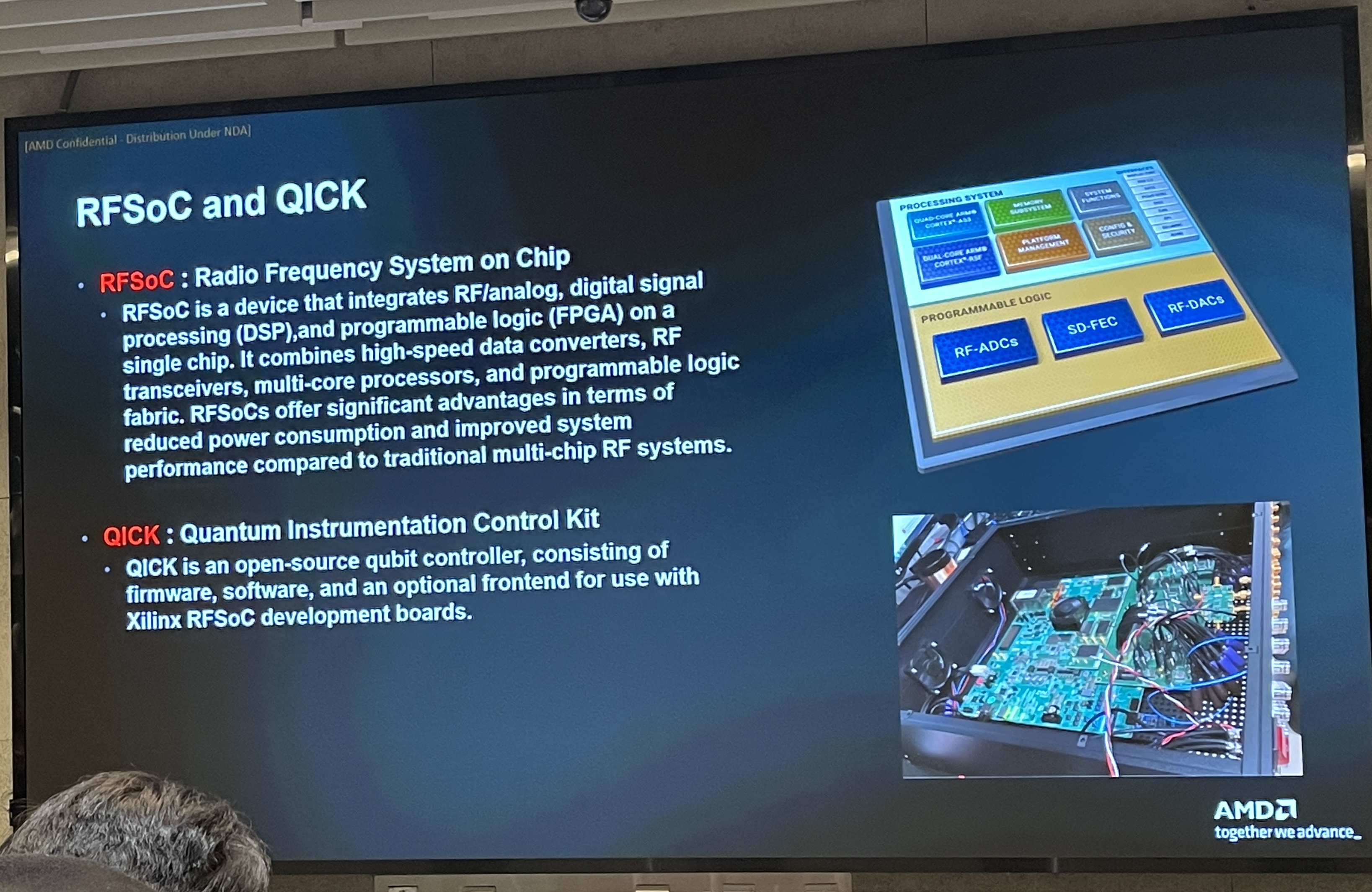
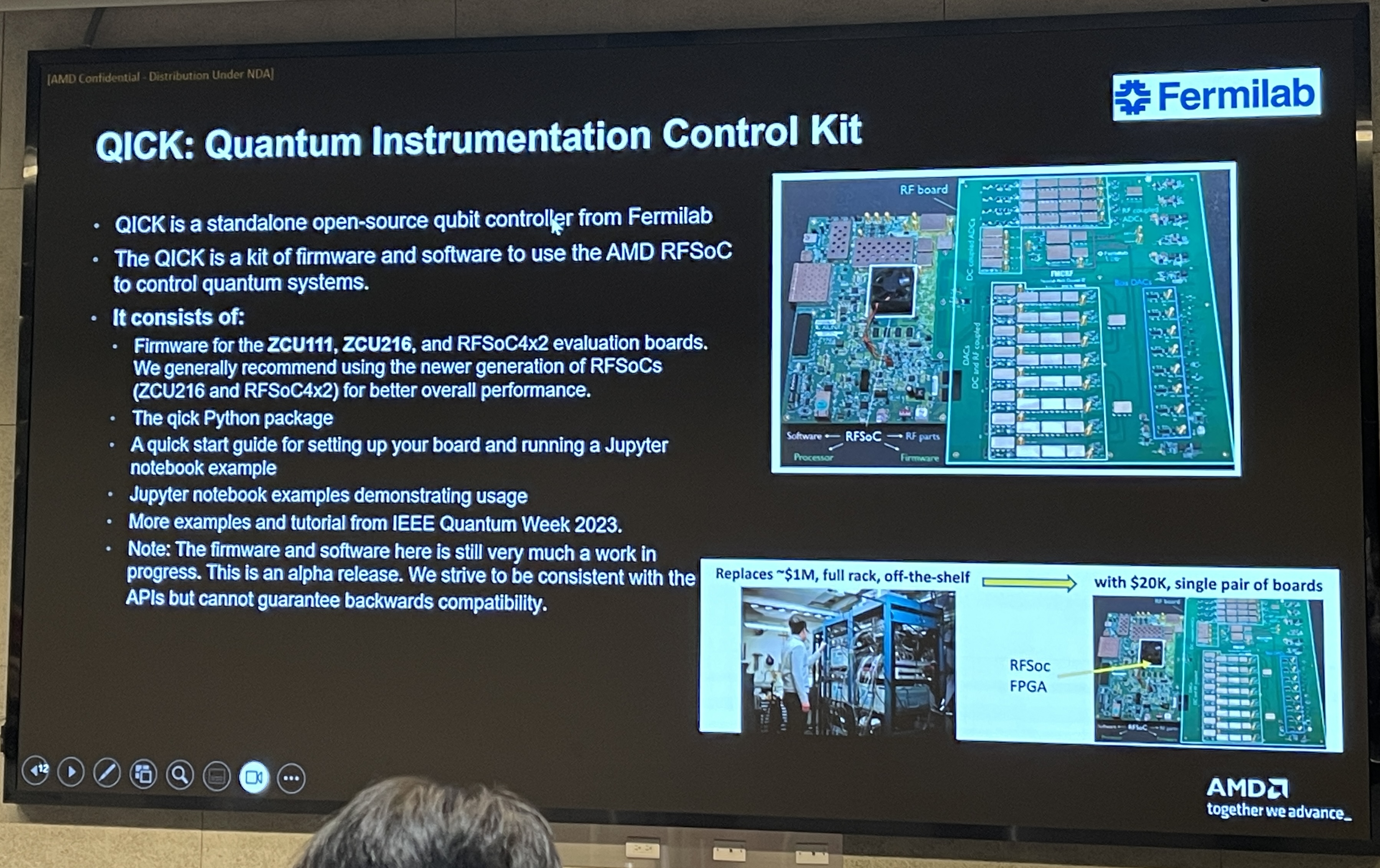
▲ The QICK project adopts a single-chip RFSoC that integrates an FPGA, RF signal sources, DACs, and ADCs.
AMD's Product Roadmap
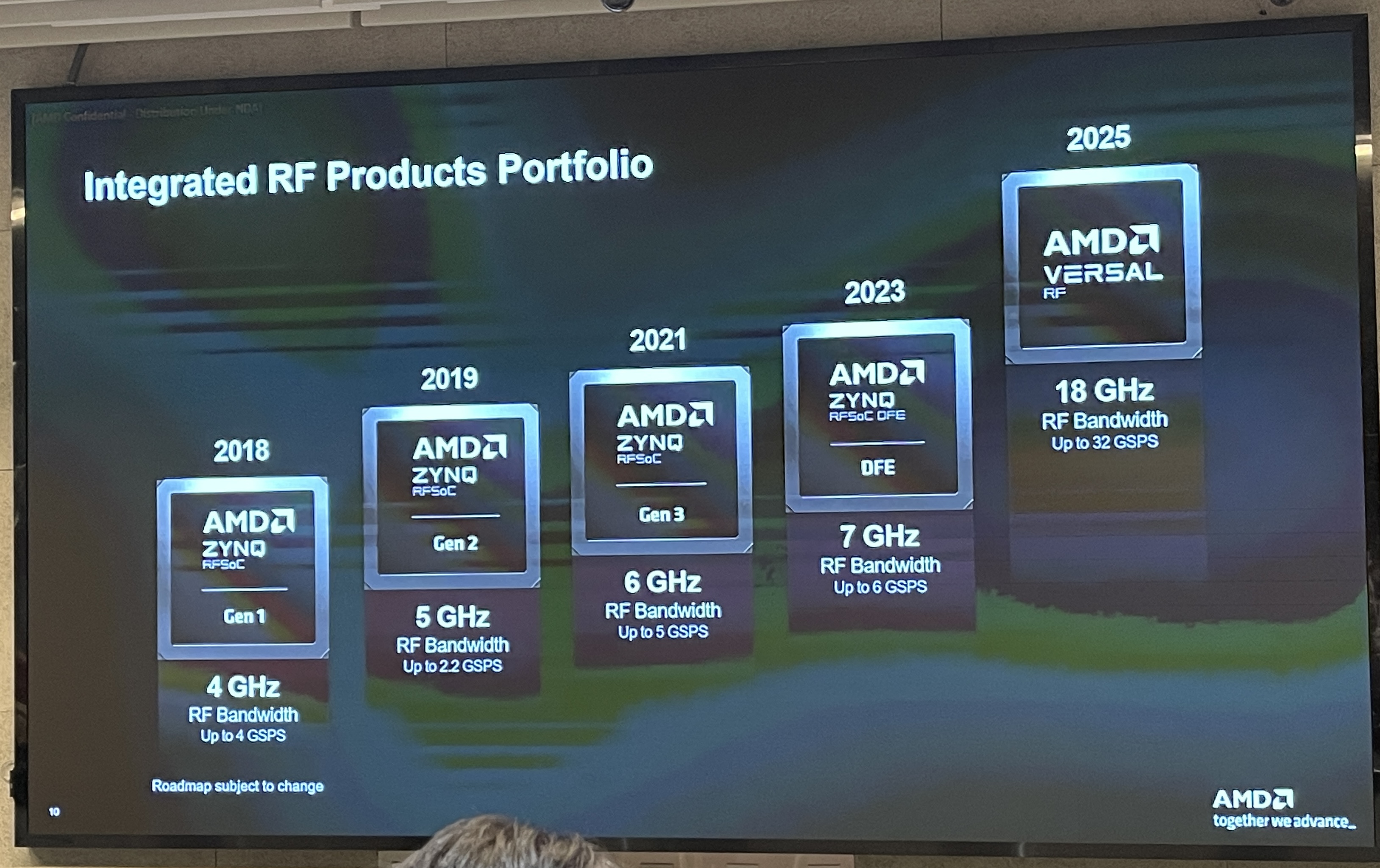
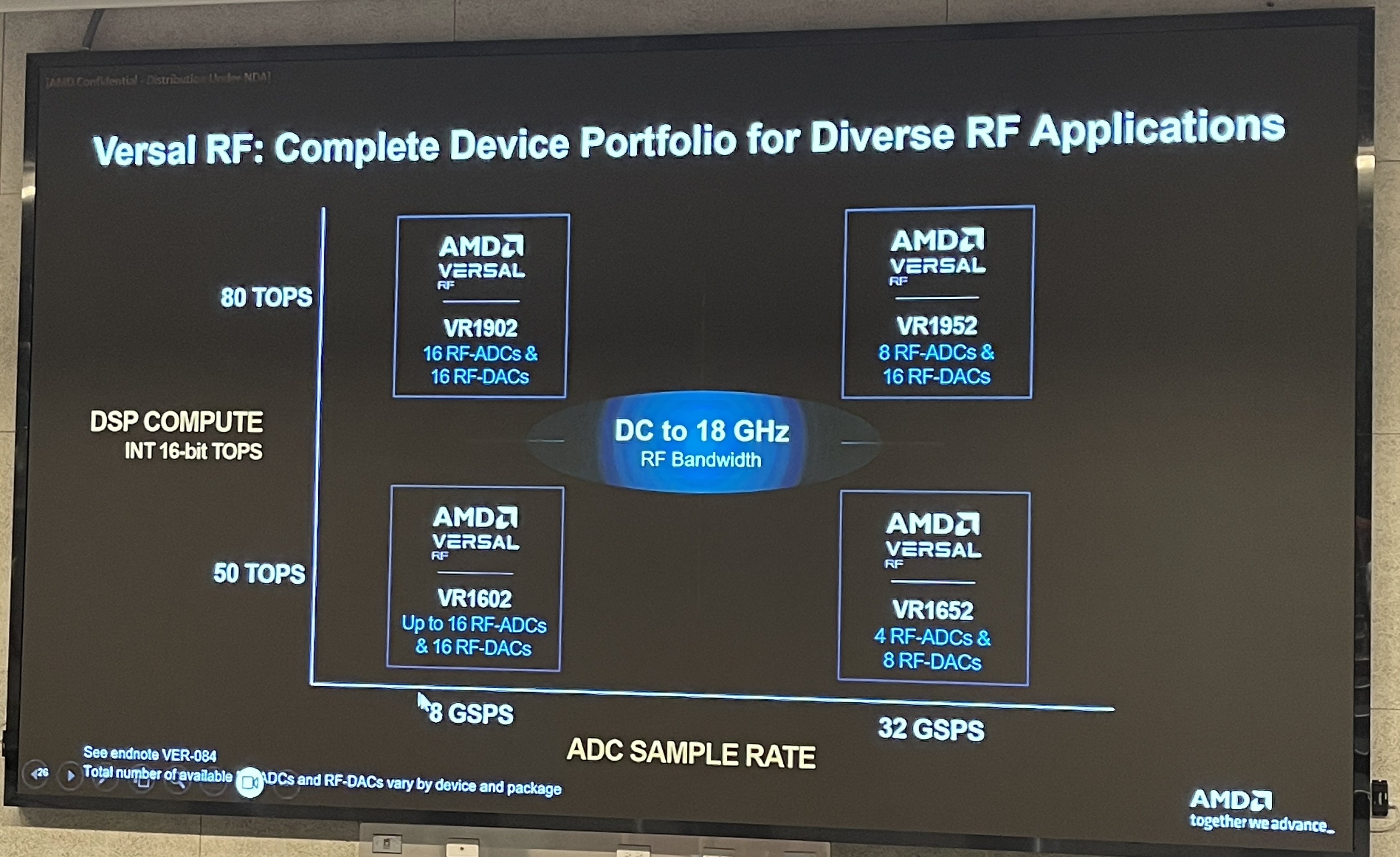
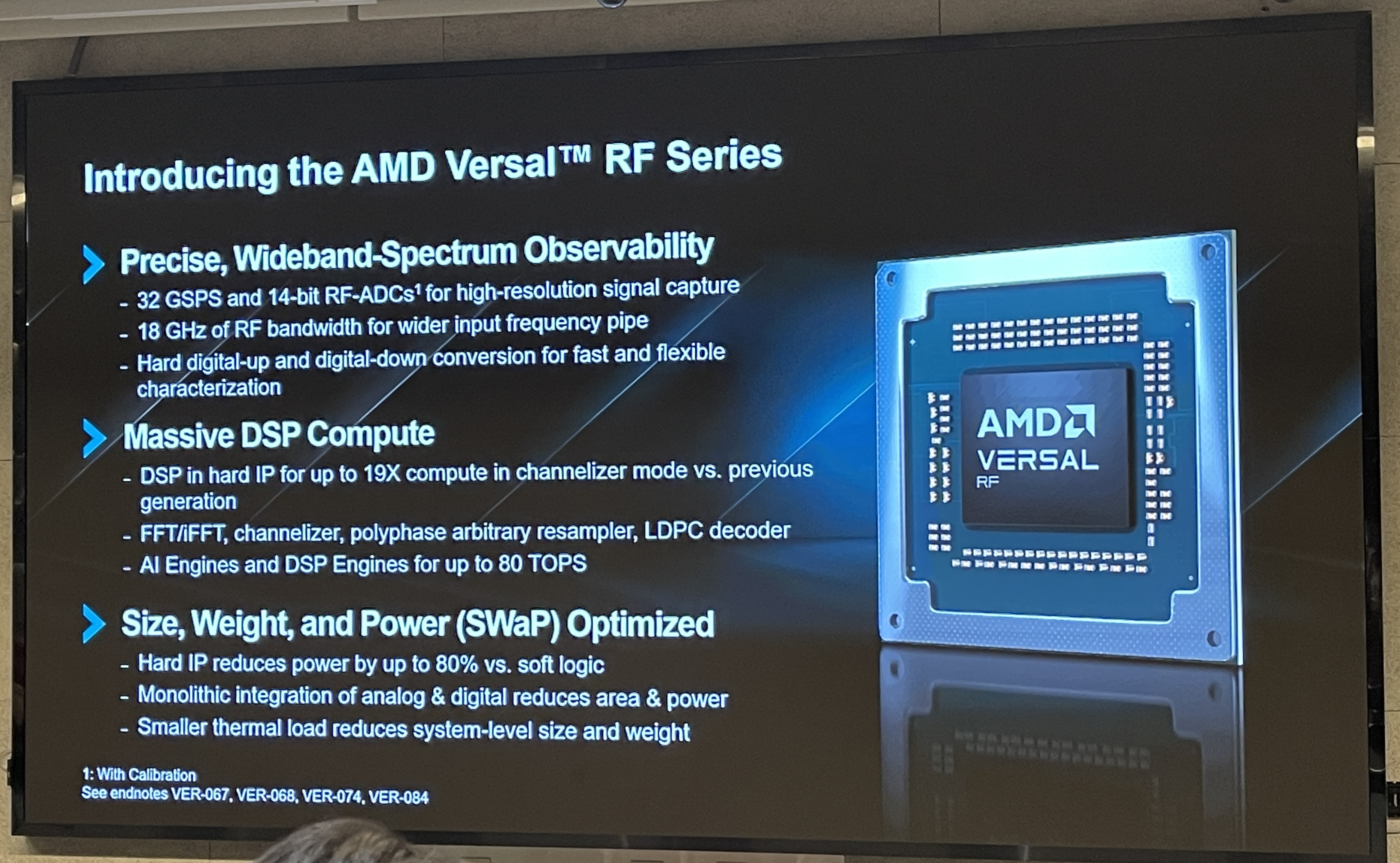
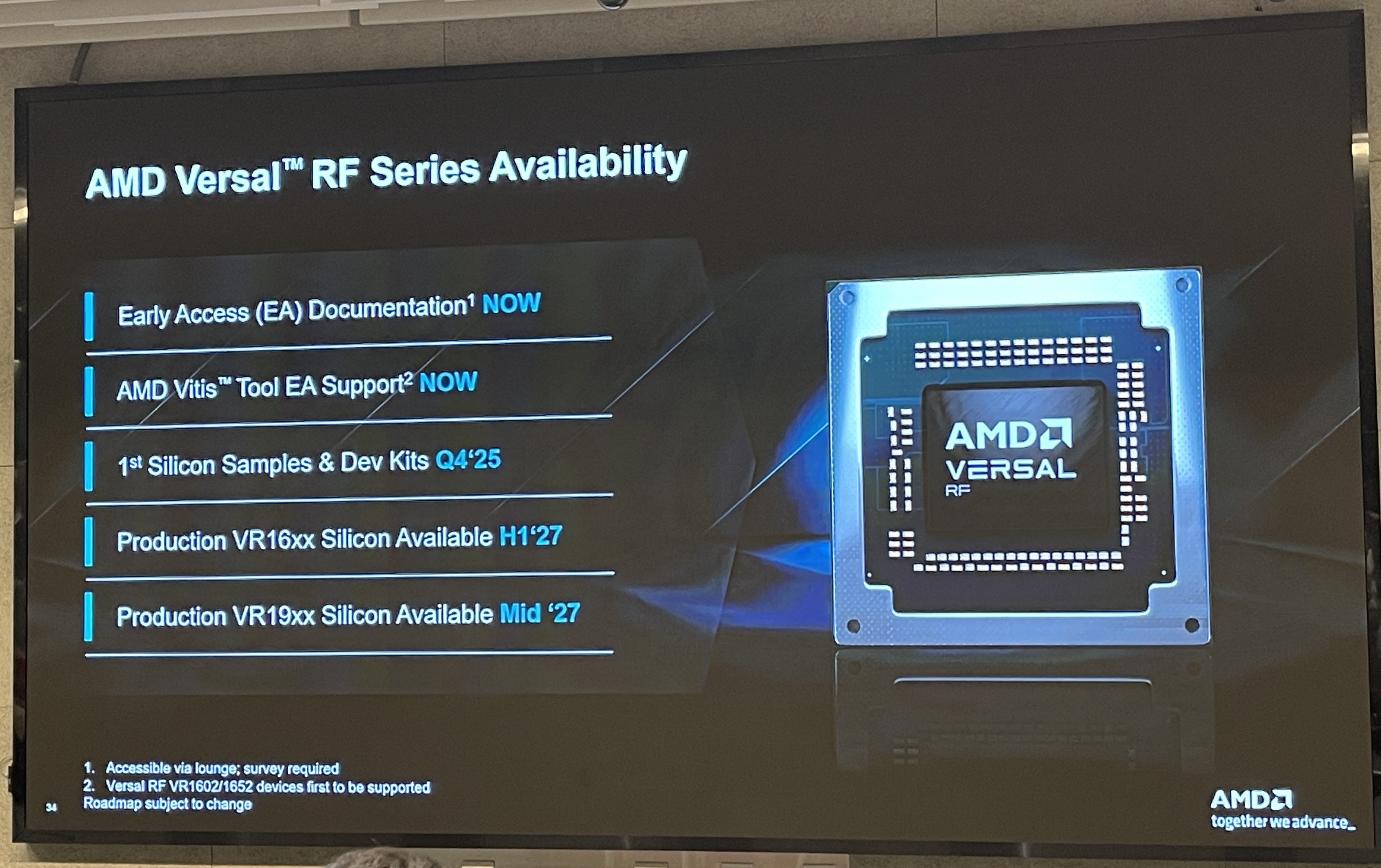
▲ The current generation of product chips, ZYNQ, and the next generation, VERSAL (expected for mass production in 2027).
Originally written in Chinese by the author, these articles are translated into English to invite cross-language resonance.
 Peir-Ru Wang